Written By
Ryan LeClaire
Published On
April 24, 2026

Is it too early to start thinking about your lawn? Never!
A lot of us still have a few stubborn patches of snow on our lawns, and it’s a bit too early to start weed control treatments, but it’s never too early to start setting your lawn goals this year. Maybe you want your greenest grass ever. Or maybe you want to wipe out a weed that started to intrude last year.
At Weed Man, we are your local lawn experts for Muskoka, Parry Sound, Haliburton, and the surrounding areas. Based on our experiences, here are the five most common problems people in these areas face every year, and what you can do about them.
Moles are small, burrowing animals commonly found in lawns and gardens. They are dark gray or brown, with cylindrical bodies and strong claws for digging in soil. And that digging is exactly why homeowners hate them. Moles can make a mess of your lawn in a hurry.
It's important to remember that, yes, moles can sometimes be a nuisance. But they also feed on insects, worms, and other small creatures in the soil, which helps balance your ecosystem.
The problem is that mole damage can look a lot like skunk damage or raccoon damage. And it also looks a lot like grub damage (more on that later).
It's identified with little mounds or hills of dug-up dirt in the lawn. Skunks and raccoons tend to roll the lawn. On the other hand, mole damage looks more like tunneling, with displaced dirt.
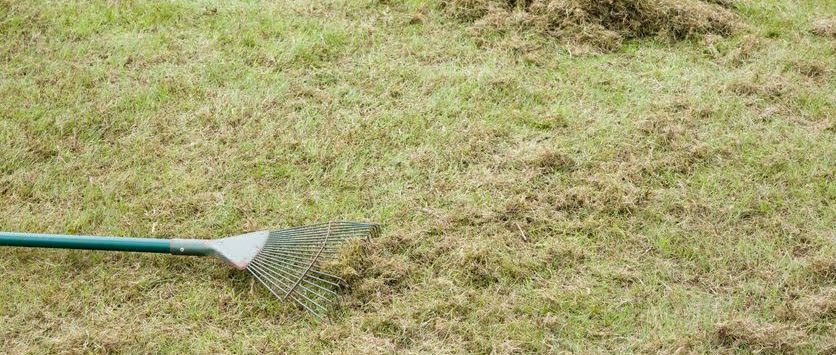
The good news is that the damage is usually ugly but superficial. It will quickly heal after you rake and fertilize the lawn. But if the damage is a little more severe, you may want to fill those with a suitable grass seed.
Here are a few preventative measures that can help keep moles away:
These steps can help keep the moles away next year.
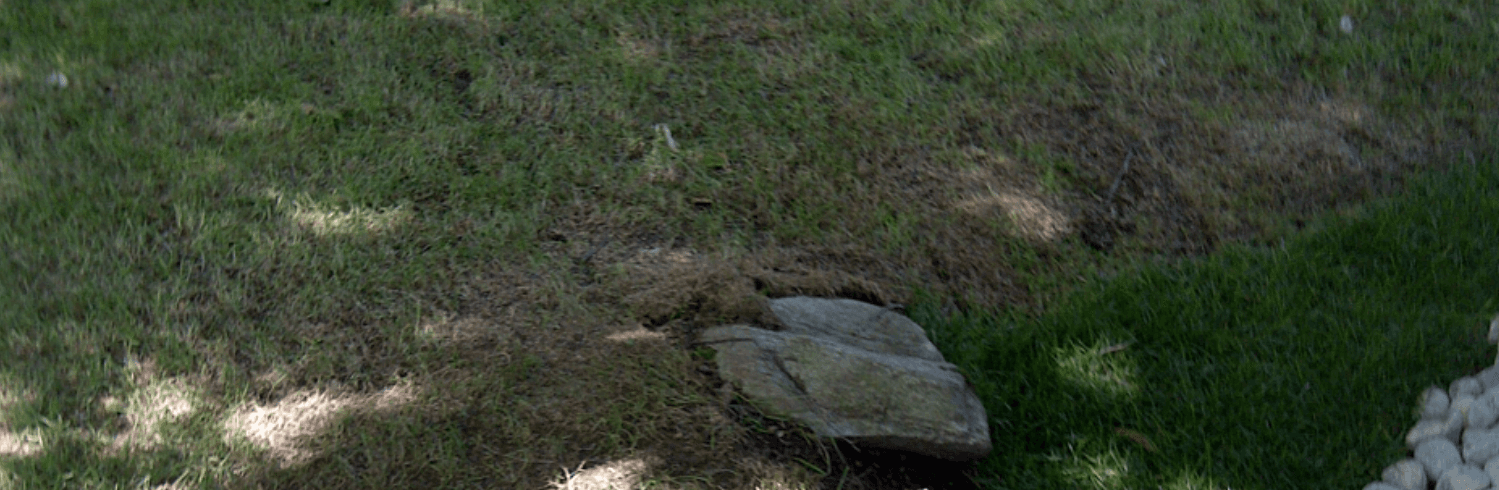
Grubs are the larval stage of beetles, such as Japanese beetles and June bugs, that feed on grass roots beneath your lawn's surface. These voracious eaters can wreak havoc on your turf, causing it to become spongy and vulnerable to drought and other stressors.
As we mentioned in the previous section, grub damage can look a lot like mole damage.
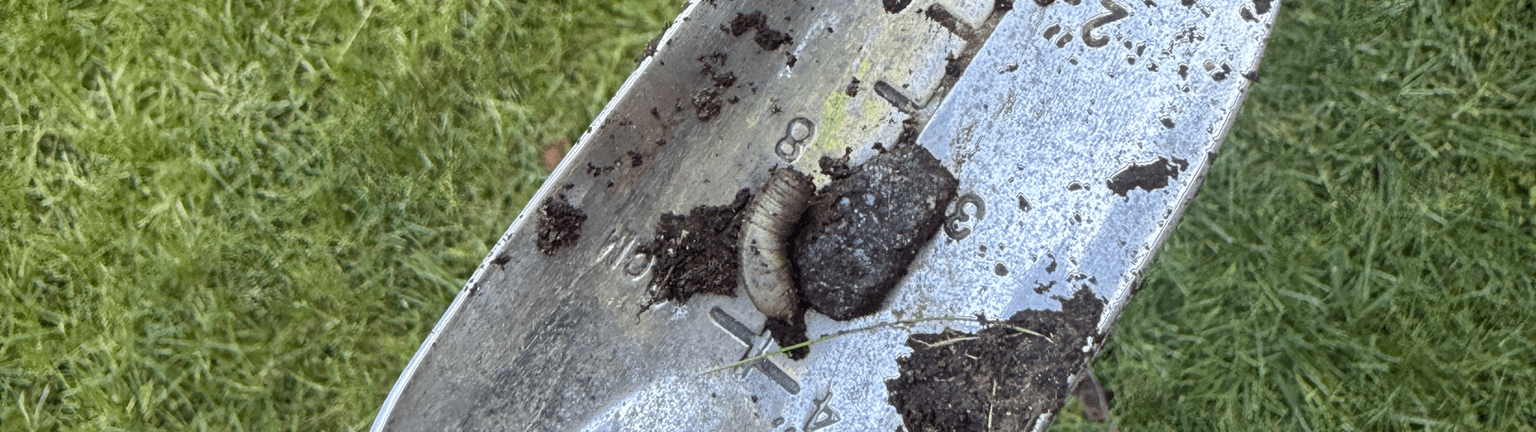
Most of our clients assume they have grubs when they see any kind of damage like that in their lawn. A lot of people will call us and say, “We’ve got grubs!” But our rule of thumb is that unless you've actually found grubs, it's not grubs. You should be able to actually see them.
We will usually dig with a little garden trowel to test a couple of different spots. Grubs are typically identified by a circular patch of yellowing lawn. It tends to look a bit like thatch or winter-kill, especially if you didn't do any seeding or any dethatching before the winter.
You shouldn’t have to look too far. Grubs are usually within two inches of the surface.
We usually suggest you rake those mounds back down, give them a little pat, and then seed over the damage to try to prevent it from happening again.
If you think you’re dealing with a grub problem, you should contact us right away. Timing is crucial for grub control. Applying treatments during peak egg-laying periods by adult beetles, typically in spring and early summer, ensures maximum effectiveness.
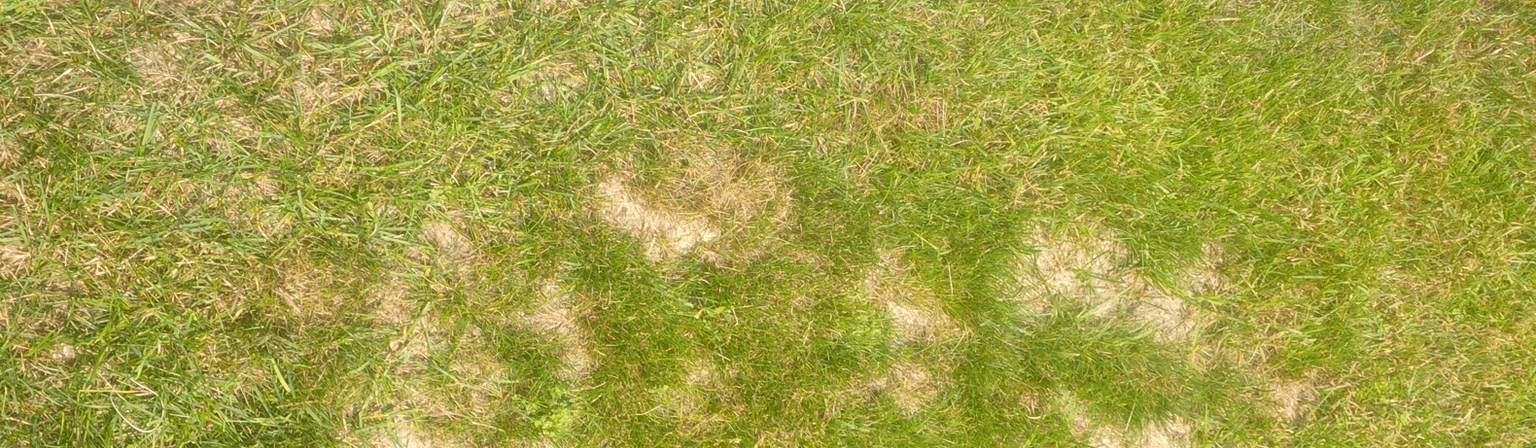
Chinch bugs are also a common problem across the Muskoka, Haliburton, and Parry Sound areas. In many cases, the damage can look like simple drought damage or pet urine, so it often goes undiagnosed or misdiagnosed.
You’re going to look for yellowing patches of dead grass. It literally looks like the lawn has been trampled, creating an overlapping layer of carpeted yellow grass.
The actual chinch bugs are so small that most of our clients can't identify them themselves, so we ask them a lot of questions like:
Another important question we ask (particularly if they have sprinklers/irrigation) is “When are you watering your lawn? What time of day?” Because afternoon watering can actually cause chinch bugs!
Chinch bugs really like warm and moist environments, so watering in the afternoon can actually attract chinch bugs– and attract them to your neighbour’s yard too!
Be a good neighbour. Water in the mornings before the sun has a chance to heat everything up.
Your local Weed Man professional may be able to offer other solutions and recommend the best available treatment to improve the condition of your lawn.
However, the best offence is a good defence, and strong cultural practices are the best way to keep chinch bugs out of your yard.
This includes:
Thick and healthy turf will choke out unwanted weeds and keep lawn pests/insects away.
This is one of the most problematic and aggressive weeds we face.
Crabgrass is an annual grassy weed that germinates in the spring and thrives in thin, stressed lawns. It grows quickly, spreads aggressively, and crowds out healthy turf.
Smooth crabgrass (the most common problem) has swollen, zigzag nodes, a coarse texture, and bright-green, pointed blades that grow from a shared stem.
You frequently see it in sandy/sunny locations where the turf is in a weakened state, like cracks along sidewalks and driveways. It's hyper-aggressive! Left unchecked, the damage can take years to reverse!
It’s not easy! This is probably something you don’t want to try yourself. Some products at the hardware store may make big promises about wiping out all weeds. But trust us when we say that fighting crabgrass is a lot more complex than point-and-shoot.
The best crabgrass control strategies are ongoing and include:
Once again, a thick, healthy, and well-maintained lawn is always the best defence against crabgrass and other unwanted lawn invaders.
We don’t have to tell you that this is the rainiest Spring we have seen in years. You probably have standing puddles all over your yard right now.
This is particularly problematic when your lawn sits on bedrock, and there is not much room for the water to go.
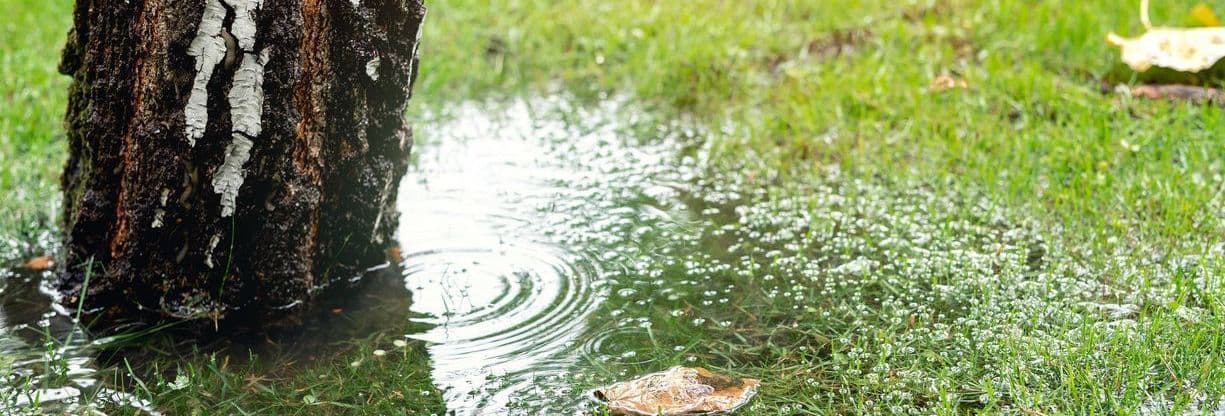
If you walk across your lawn and you can hear your footsteps, you probably need an aeration. The soil under your feet shouldn't feel like concrete.
At the same time, if you’re seeing a lot of standing water, a professional aeration can help you break up the compacted soil and help your lawn absorb more water (as well as more sun and nutrients) the way it’s supposed to.
But as we said earlier, that is unfortunately not an option if your lawn is on top of bedrock. Some people ask us if they need an aeration, and we have to tell them that they have too many roots or too many rocks for that.
But the good news is that thoroughly raking your lawn to remove the thatch, then spreading top soil/top dressing can help you prevent a lot of those issues, if you can't do aeration. But if you’re still having trouble, you may need to look at other drainage options for your property.
It’s been a long winter and a wet spring. Don’t waste your nice weather days worrying about weeds or other lawn problems! Call Weed Man!
“I've used Weed Man Muskoka for a few years now and have always found them to be professional and pleasant to deal with. I have the lawncare package that includes weed control, bug control and fertilizer and my lawns (that were a disaster) are now noticeably lush and weed free.” - 5 Star Google Review.
You can start right now by answering a few quick questions about your lawn.
Written By
Ryan LeClaire
Published On
April 24, 2026

Is it too early to start thinking about your lawn? Never!

Did you know that 76% of homeowners feel competitive about their lawns? But only 23% of those people feel like they’re winning.

Stop watering your lawn every day! It’s not helping, and it may actually be encouraging weed growth.

