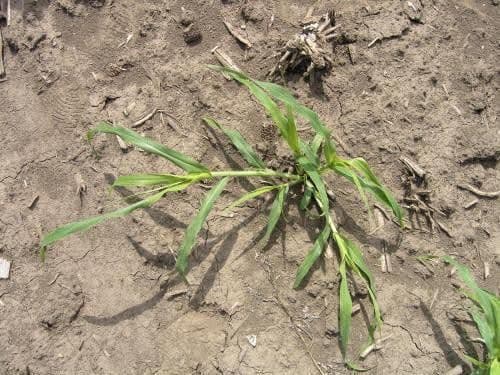
Wild proso millet is a grass species that is native to Central Asia and parts of Europe and is now considered a weed in some areas. In some regions, particularly in India and China, it is grown for birdseed or for human consumption. The grain is highly nutritious and contains high amounts of carbohydrates, protein, and various vitamins and minerals.
Although there are many benefits, wild proso Millet is regarded as an undesirable plant in normal turfgrass. It can grow from 2 to 6 feet tall, and its leaf blades are ½ inch to ¾ inch wide, with stiff hairs on both the upper and lower surfaces of the blade. It is a hardy plant that can grow in many environments, including dry and arid regions. It can be spread by harvesting equipment, birds, manure, irrigation water, and small animals.
The key to effectively controlling wild proso millet is to prevent the establishment of plant populations and to limit their seed production. This may not always be successful, and when large infestations are present, post-emergent applications can be used to kill existing plants. However, these products are non-selective, meaning they can also damage the desirable grasses in your lawn. The areas that are treated will need to be overseeded with a grass species suitable to your area.
A thick, healthy, well-maintained lawn is always the best line of defense. This can be achieved through beneficial cultural practices.
Your local Weed Man professional will be able to offer other solutions and recommend the best form of treatment that is suitable to improve the conditions of your lawn.
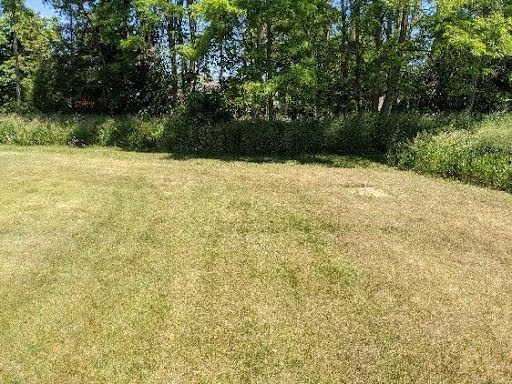
Drought stress refers to the negative effects on a lawn when there is not enough water available for the grass to properly grow and thrive. This can cause the grass to turn brown and dormant, while al...
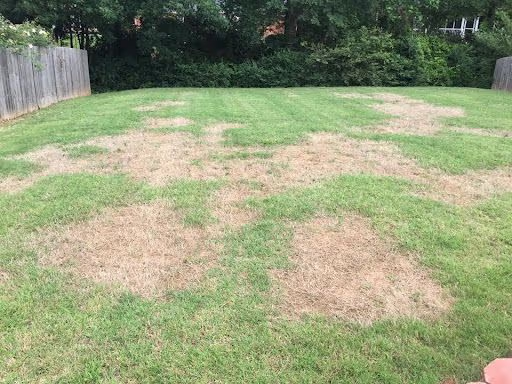
Take-All Patch, also called “Root Rot,” is a common fungal disease that affects the roots of grass plants, particularly in golf courses and lawns. It attacks lawns that are already stressed, weakened,...
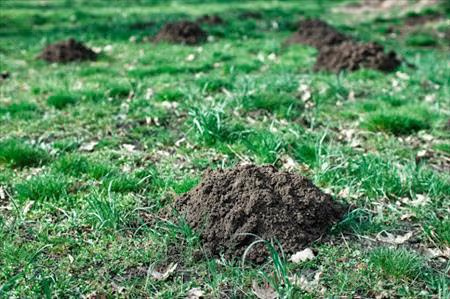
The adult mole is a small, burrowing mammal, commonly found in lawns and gardens. It has dark gray or brown velvety fur and a cylindrical body that is 15 to 20 cm (5 to 8 inches) long. It has small ey...

