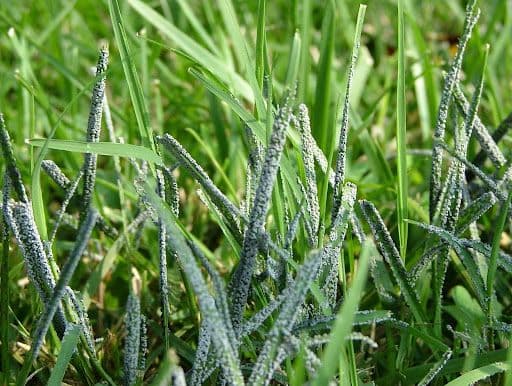
Slime Mold is a fungus-like organism that can appear in lawns, particularly during damp or humid conditions, and can spread quickly to cover large areas of the grass.
Slime Mold will sometimes appear as a thin layer of slimy, paste-like material that covers the leaf blades. It can appear in different colours and will later dry to form powdery growths on the leaves.
Slime Mold is not harmful to humans or animals, and it does not damage lawns directly. However, it can be unsightly and may cause concern for homeowners who are not familiar with the organism. Slime Mold feeds on bacteria and other microorganisms in the soil, so it might indicate an excess of organic matter in the soil, such as dead leaves or other debris.
There are various species of Slime Molds throughout North America. Each type differs in appearance and behavior, though they all share the characteristic of being slimy and gelatinous. They are not specific to any certain type of grass and can affect both warm- and cool-season grasses.
Some of the more common Slime Mold varieties are:
Slime Mold will typically disappear on its own as conditions become drier and less favourable for growth. When experiencing a light to moderate case of Slime Mold, it’s best just to let nature take its course. Raking out the affected areas is an option, but it’s not always possible or necessary.
A thick, healthy, well-maintained lawn is the best line of defence. Here’s how you can adjust your beneficial cultural practices to reduce the spread of Slime Mold:
Your local Weed Man professional may be able to offer other solutions and recommend the best form of treatment that is available to improve the conditions of your lawn.
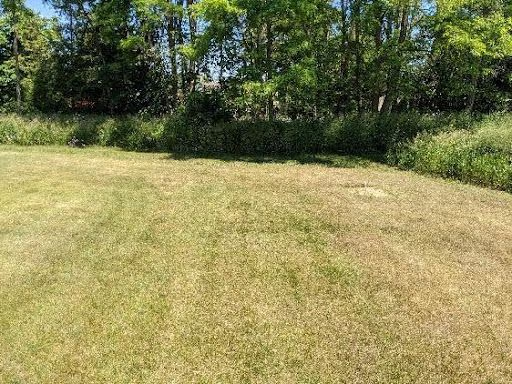
Drought stress refers to the negative effects on a lawn when there is not enough water available for the grass to properly grow and thrive. This can cause the grass to turn brown and dormant, while al...
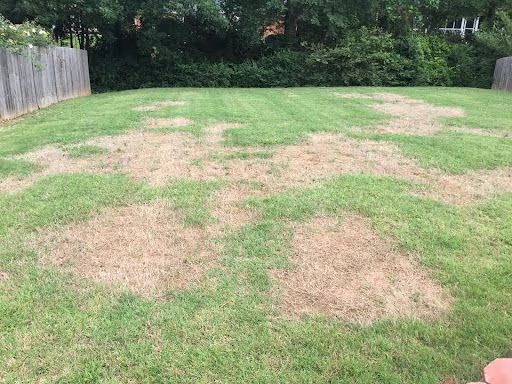
Take-All Patch, also called “Root Rot,” is a common fungal disease that affects the roots of grass plants, particularly in golf courses and lawns. It attacks lawns that are already stressed, weakened,...
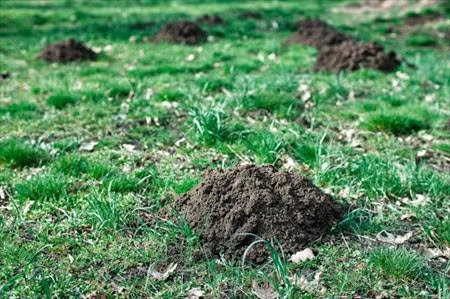
The adult mole is a small, burrowing mammal, commonly found in lawns and gardens. It has dark gray or brown velvety fur and a cylindrical body that is 15 to 20 cm (5 to 8 inches) long. It has small ey...

