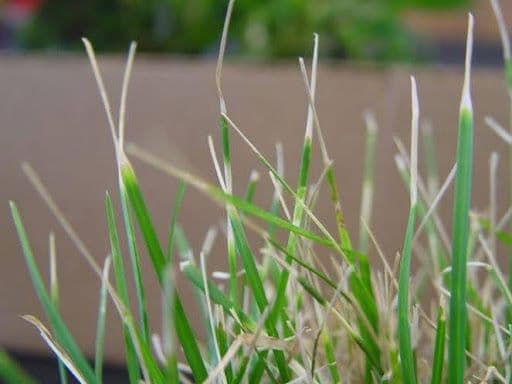
Leaf Blight disease typically affects cool-season turfgrasses, such as Kentucky Bluegrass, Tall Fescue, and Perennial Ryegrass. The symptoms of Leaf Blight include elongated, water-soaked lesions on the leaves, which eventually turn yellow or brown and can even cause the leaves to die. In a heavily infested lawn, the damage appears in circular patches that often form large, bleached areas. Closer inspection of the lawn reveals that individual blades of grass are yellowing from the tips down.
Leaf Blight disease typically affects cool-season turfgrasses, such as Kentucky Bluegrass, Tall Fescue, and Perennial Ryegrass. The symptoms of Leaf Blight include elongated, water-soaked lesions on the leaves, which eventually turn yellow or brown and can even cause the leaves to die. In a heavily infested lawn, the damage appears in circular patches that often form large, bleached areas. Closer inspection of the lawn reveals that individual blades of grass are yellowing from the tips down.
Leaf Blight can be difficult to control, as it thrives in hot and humid weather conditions. In most cases, a change in the weather can help reduce the spread of this disease. You can also adjust your cultural practices to improve the health of the lawn and further limit the spread of the disease. However, depending on the size of the infestation and the scope of the damage, other forms of control may be necessary.
A thick, healthy, well-maintained lawn is the best line of defence. Here’s how you can adjust your beneficial cultural practices to reduce the spread of Leaf Blight:
Your local Weed Man professional may be able to offer other solutions and recommend the best form of treatment that is available to improve the conditions of your lawn.
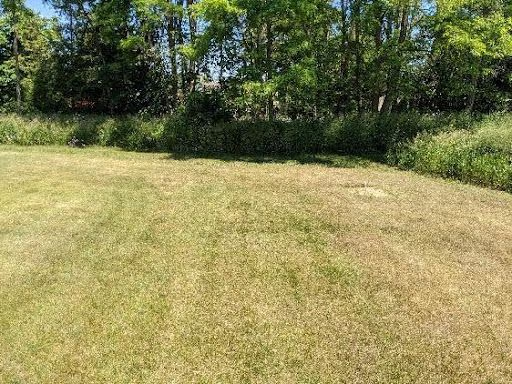
Drought stress refers to the negative effects on a lawn when there is not enough water available for the grass to properly grow and thrive. This can cause the grass to turn brown and dormant, while al...
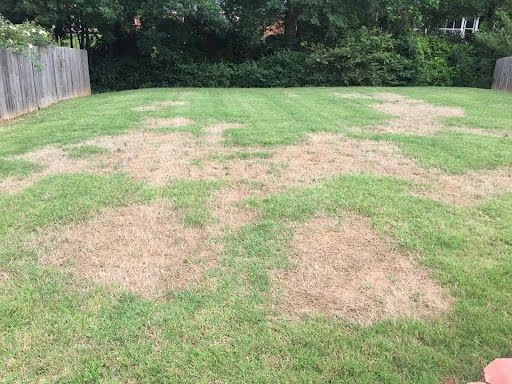
Take-All Patch, also called “Root Rot,” is a common fungal disease that affects the roots of grass plants, particularly in golf courses and lawns. It attacks lawns that are already stressed, weakened,...
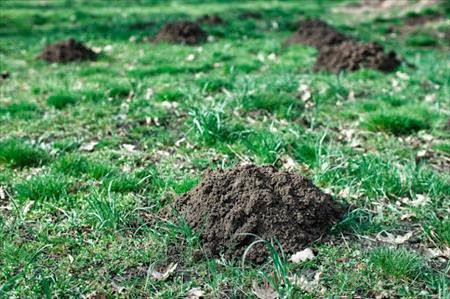
The adult mole is a small, burrowing mammal, commonly found in lawns and gardens. It has dark gray or brown velvety fur and a cylindrical body that is 15 to 20 cm (5 to 8 inches) long. It has small ey...

