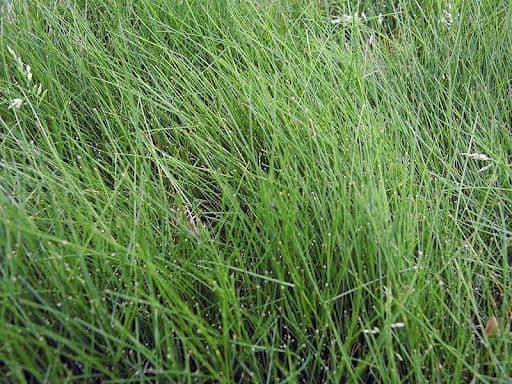
Fine Fescue is a group of cool-season grasses that are known for their fine leaf texture and shade tolerance. They are often used for turf, ground cover, and erosion control.
Varieties of Fine Fescue include Creeping Red Fescue, Chewings Fescue, Sheep Fescue, and Hard Fescue. They are typically low maintenance and can survive in poor soil conditions, so they are often blended with other turf grass varieties, like Kentucky Bluegrass, to improve aesthetics and to create a diverse, hardy lawn that will thrive in areas where it is generally difficult to establish grass. Fine Fescue grasses are well adapted to acidic, infertile soils, and low maintenance sites, such as shade, rocky outcrops, and low-water-use landscapes. They are not well suited for high-traffic areas and may go dormant during hot, dry weather.
It’s important to keep a proper balance of grass species in your lawn, because an excess of Fine Fescue creates a greater likelihood of leaf diseases, such as Red Thread or Leaf Blight.
A thick, healthy, well-maintained lawn is always the best line of defence. This can be achieved through beneficial cultural practices, which include:
Your local Weed Man professional will be able to offer other solutions and recommend the best form of treatment that is suitable to improve the conditions of your lawn.
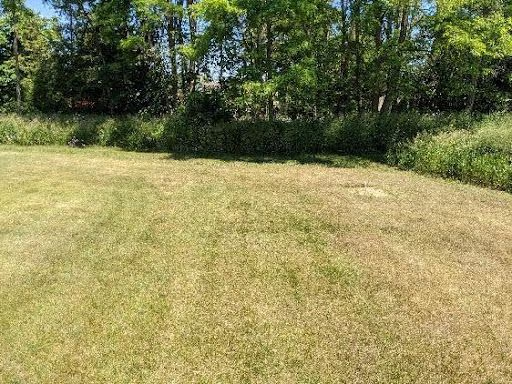
Drought stress refers to the negative effects on a lawn when there is not enough water available for the grass to properly grow and thrive. This can cause the grass to turn brown and dormant, while al...
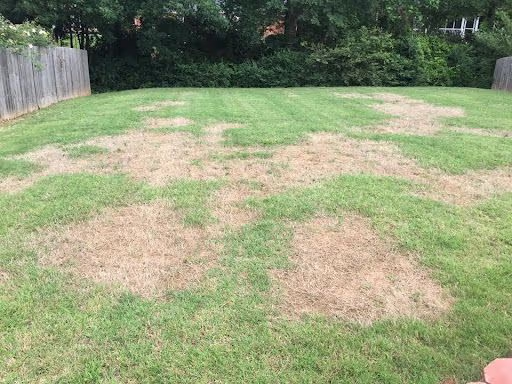
Take-All Patch, also called “Root Rot,” is a common fungal disease that affects the roots of grass plants, particularly in golf courses and lawns. It attacks lawns that are already stressed, weakened,...
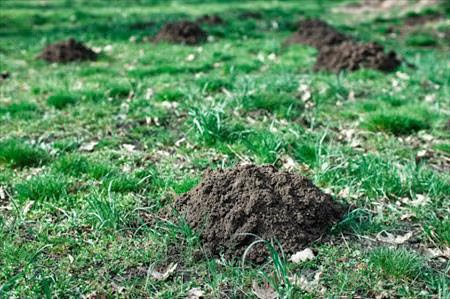
The adult mole is a small, burrowing mammal, commonly found in lawns and gardens. It has dark gray or brown velvety fur and a cylindrical body that is 15 to 20 cm (5 to 8 inches) long. It has small ey...

