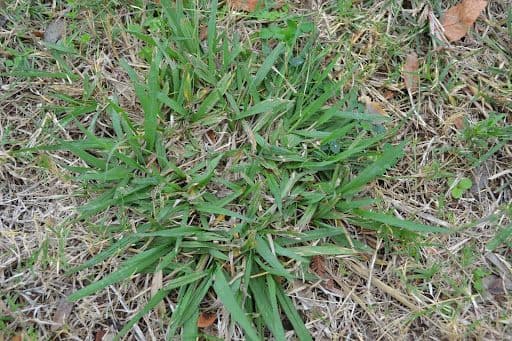
Dallisgrass is a warm-season grassy weed species found on residential lawns throughout the southern United States. It is a coarse-textured perennial that grows in an ever-enlarging circular clump. It sometimes grows so large that the center dies out while the outer rings continue to smother all other turf grasses in its path.
Dallisgrass is very aggressive and can easily outcompete desirable grasses, making it difficult to control. Its short rhizomes root easily in moist soil, and it has a distinctive seed head that is tall and purplish in colour and produces a large quantity of seeds. Dallisgrass will also thrive in sandy or clay soils, growing twice as fast as regular turf grasses and creating unsightly tufts for the homeowner.
An effective way to control small infestations of Dallisgrass is to pull up individual plants by hand and then repair these areas with desirable grass seed varieties or sod. If the infestation is larger, other forms of control may be necessary.
A thick, healthy, well-maintained lawn is always the best line of defence. This can be achieved through beneficial cultural practices, which include:
Recommended Mowing Height
Your local Weed Man professional will be able to offer other solutions and recommend the best form of treatment that is suitable to improve the conditions of your lawn.
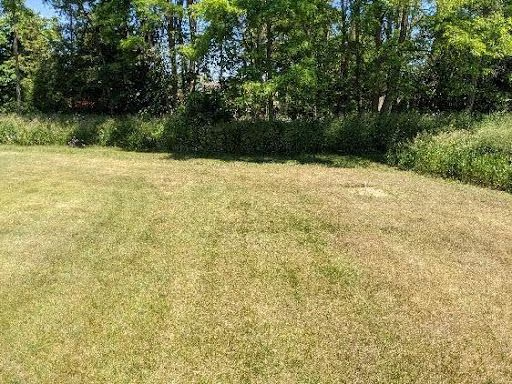
Drought stress refers to the negative effects on a lawn when there is not enough water available for the grass to properly grow and thrive. This can cause the grass to turn brown and dormant, while al...
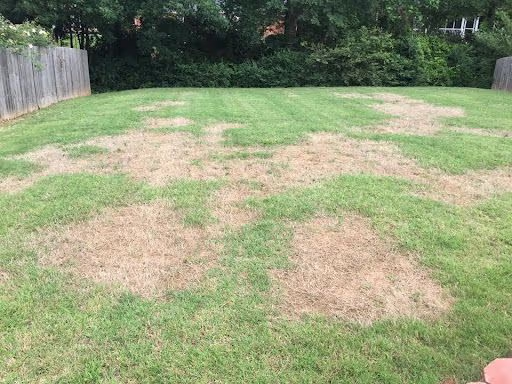
Take-All Patch, also called “Root Rot,” is a common fungal disease that affects the roots of grass plants, particularly in golf courses and lawns. It attacks lawns that are already stressed, weakened,...
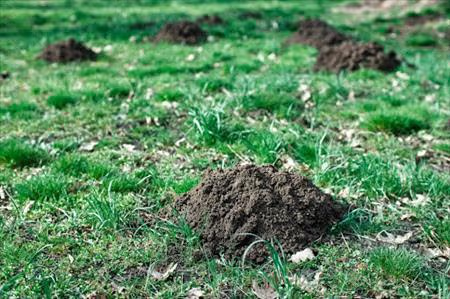
The adult mole is a small, burrowing mammal, commonly found in lawns and gardens. It has dark gray or brown velvety fur and a cylindrical body that is 15 to 20 cm (5 to 8 inches) long. It has small ey...

