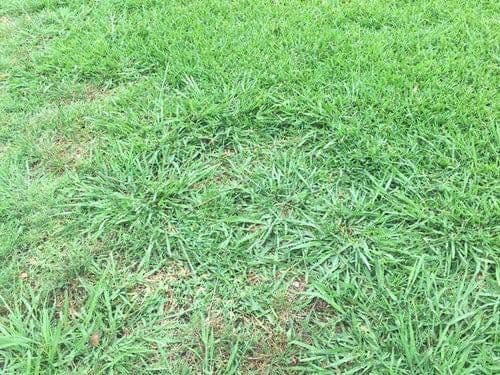
Crabgrass is a troublesome annual weed grass that germinates in the spring when soil temperatures are between 54˚F and 56˚F. Crabgrass favors sandy soils and hot, dry areas of your lawn that have thinned and along sidewalks and driveways.
Crabgrass does not blend well with most other desirable grasses and can be very invasive if not dealt with appropriately. Once established, crabgrass can take several years to get under control.
Crabgrass will not begin to germinate until early summer. It will have a lime green color and will look similar to a miniature corn plant. Because it’s an annual plant, it will die off in late summer, turning a purplish color and leaving its seed heads to germinate the following year.
Crabgrass is not controllable with standard broadleaf weed control products. Keep in mind that ongoing maintenance is crucial for eliminating Crabgrass. If Crabgrass becomes a problem in your St. Augustine lawn, pre-emergent applications can be applied in the fall and spring to help reduce the spread.
A thick, healthy, well-maintained lawn is always the best line of defense. This can be achieved through beneficial cultural practices, which include:
Recommended Mowing Height
Your local Weed Man professional will be able to offer other solutions and recommend the best form of treatment that is suitable to improve the conditions of your lawn.
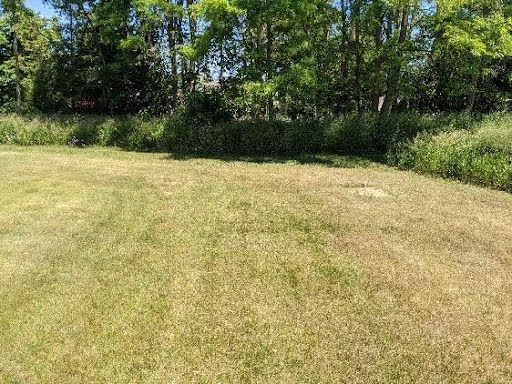
Drought stress refers to the negative effects on a lawn when there is not enough water available for the grass to properly grow and thrive. This can cause the grass to turn brown and dormant, while al...
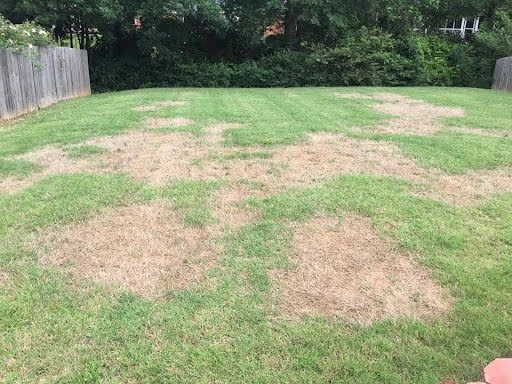
Take-All Patch, also called “Root Rot,” is a common fungal disease that affects the roots of grass plants, particularly in golf courses and lawns. It attacks lawns that are already stressed, weakened,...
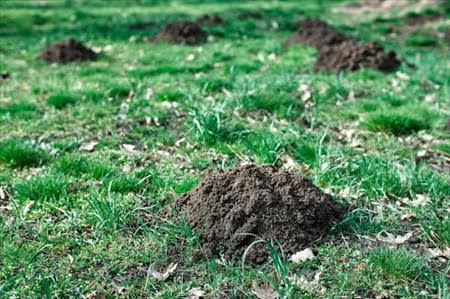
The adult mole is a small, burrowing mammal, commonly found in lawns and gardens. It has dark gray or brown velvety fur and a cylindrical body that is 15 to 20 cm (5 to 8 inches) long. It has small ey...

