Written By
Ryan LeClaire
Published On
April 6, 2026

Did you know that it’s possible to hurt your lawn by using both too much and too little lawn fertilizer? It’s true!
That just goes to show you how hard it can be to do this on your own. You need to know when to fertilize your lawn, which lawn fertilizer to use, and how much to apply.
There’s a lot at stake. This guide will walk you through everything you need to know to fertilize your lawn the right way and show you why it may be best to go with a lawn fertilizer service company.
You don’t need a lot of tools to do this the right way, but you do need the right ones.
All you really need is:
Yes, your local hardware store can sell you both things. But even if you buy the most expensive options, that’s still not going to give you the best results.
First of all, most store-bought fertilizers contain rock fillers, which can lead to inconsistent spreads and burnt turf. Your best bet is to use a slow-release granular fertilizer, like the one we use.
Secondly, you can spend anywhere between $30.00 and $300.00 on a lawn spreader at your local hardware store. But they’re not going to be as solid as the pro-grade heavy-duty models that Weed Man uses. Our pro spreaders and the pros using them mean you get an even and consistent spread every time.
This part is absolutely crucial. When we talk about the right time, it’s important to consider both timing and frequency.
Most lawns benefit from fertilization in spring, summer, and fall. But your start date will also be influenced by which agronomic zone you’re in:
However, these are just guidelines. If you have a relatively mild winter and an early spring green-up, that will push up your start date.
As you can see, there are a lot of factors involved. You can’t simply look at a calendar. It’s a combination of weather and soil conditions. This is why it’s best left up to trained professionals who understand the local grass, soil, and climate.
On average, lawns should be fertilized three to four times per year, depending on the type of fertilizer you use. However, that depends on a number of factors, such as:
Weed Man provides timed applications throughout the growing season to ensure consistent results without overfeeding.
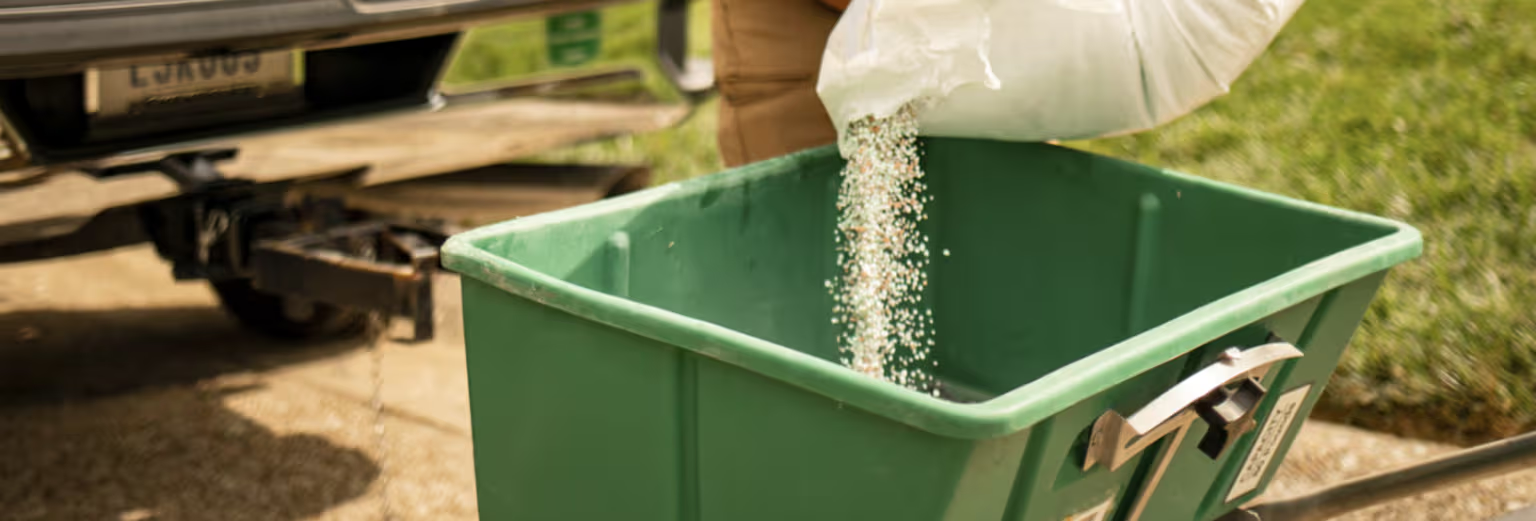
As we mentioned earlier, your best bet is to use a slow-release granular fertilizer. It’s actually your best choice for all applications.
In the springtime, it provides your lawn with:
You need a balance of both of these elements year-round to keep your turf strong and healthy.
Nitrogen in fertilizer drives green, leafy growth by helping plants produce chlorophyll for photosynthesis. It supports protein formation, cell growth, and strong above-ground development. Without enough nitrogen, plants turn yellow and grow slowly. Too much can cause weak, excessive growth, so balanced application is important for healthy plants.
Potassium triggers a protective mechanism in grass plants, hardening cell walls to resist damaging factors. Turfgrasses that are low in potassium are more vulnerable during cool winter months.
Bonus tip: You should also mulch your grass back into the lawn when cutting. This is a simple and free way to put nutrients like nitrogen and potassium back into the soil, as clippings break down naturally.
It is so easy to waste your time and money on the wrong fertilizer from the hardware store. We take pride in our own proprietary slow-release fertilizer. It’s not sold in stores and is only available to Weed Man customers.
You also get the peace of mind of knowing that it’s being applied by an expert who knows exactly how much to use and where to focus.
Here are a few tips you will want to remember:
Important: You can follow these directions and still burn your lawn. It’s not due to a fault in your application techniques; it’s a problem with your fertilizer. Many store-bought fertilizers have inconsistent compositions with a lot of filler.
This is why professional treatments from experienced experts, using pro-grade equipment, will always deliver the best results.
Once again, we would really hate for you to go through all this work and still not see the results you’re hoping for. Trust the experienced professionals who know when and how to apply treatment, and use the industry’s best slow-release granular fertilizer to achieve golf-course-quality results.
Here’s how to get even more from your fertilizer treatments.
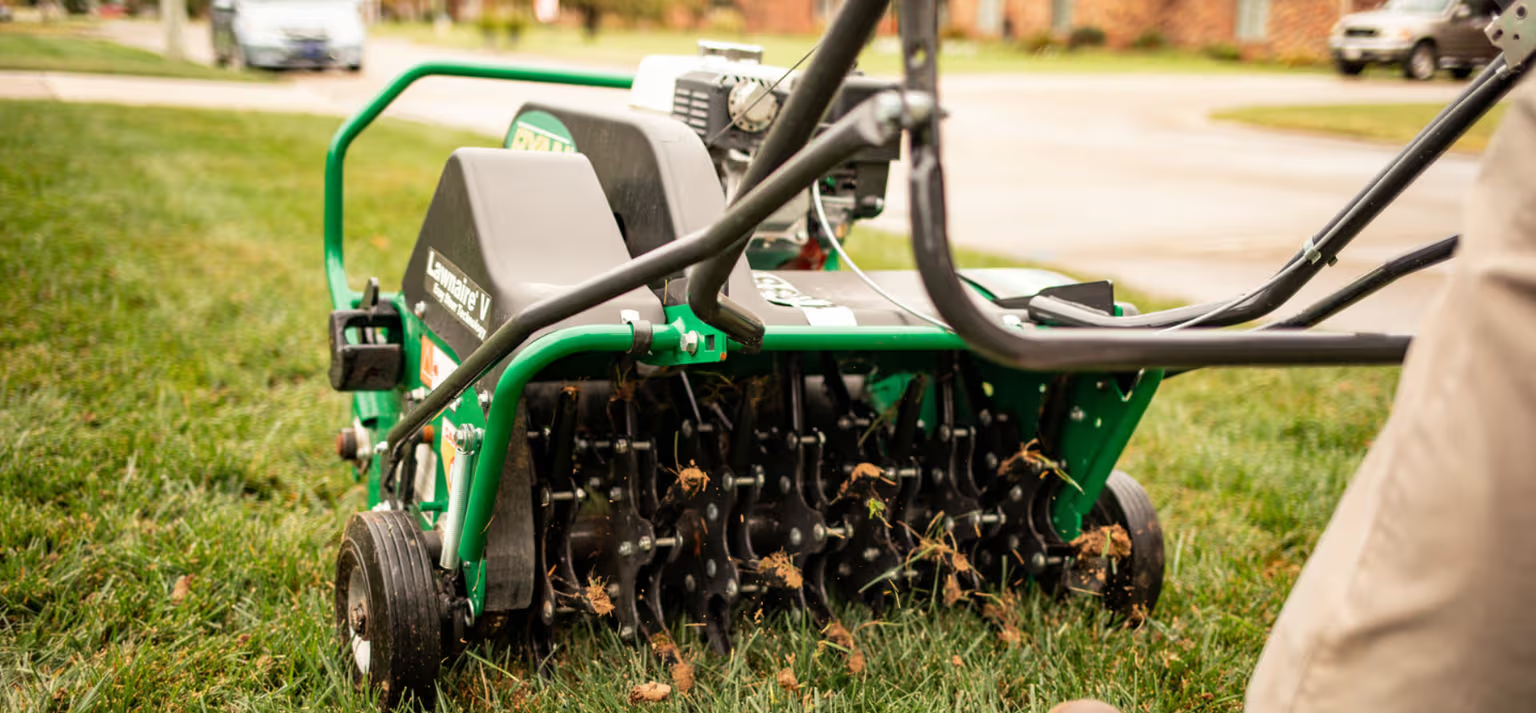
You should also consider professional lawn aeration to enhance the results of your fertilizer treatment to set you up for maximum success.
This will:
The people with the best lawns in your neighbourhood often make fertilization and aeration a one-two punch every spring as part of their pre-season lawn routine. And they trust the professionals to do it correctly with the right equipment.
Here are some of the most common mistakes that lead to frustrating results:
How do you avoid these problems? The simple answer is to trust the pros at Weed Man, who have the experience and the expertise to do the job right the first time, every time.
DIY fertilization can lead to common issues such as:
Unfortunately, all of these problems could be any one of a number of issues during the application. It could be:
The worst part: You probably won’t know the problem until you have repeated multiple applications and learned the hard way through trial and error.
Or maybe you simply didn’t see any results from your application. After spending good money at the hardware store and investing your Saturday afternoons, your lawn still looks the same after two weeks.
There is essentially only one right way to do it, and an unlimited number of wrong ways. And one simple mistake can make it the wrong way.
We hope you’ve found this guide helpful and now have a better idea of what proper fertilization requires.
Some of the most important points we’ve covered today include:
Weed Man doesn’t simply provide you with fertilization services and applications. We are also your personal lawn coach that will advise you on exactly what your turf and your soil need to thrive. We’re also professional troubleshooters and will diagnose any issue your lawn is struggling with and create a plan to resolve the issue(s).
Don’t waste your nice weather weekends on DIY fertilization! Make the right call the first time and call Weed Man! You can start right now by answering a few quick questions about your lawn.
Written By
Ryan LeClaire
Published On
April 6, 2026

As the lawn care season unfolds, now is the perfect time to lavish some attention on your grass. Weed Man Maritimes offers a range of services designed to breathe life into your turf and turn your l...


As the days grow shorter and the air gets crisper, you might think it's time to pack away your lawn care tools and prepare for winter hibernation. However, giving your lawn one final boost before the...
There are a large variety of weeds that pop up on our lawns and give us problems, and it’s hard to be familiar with all of them. Below is a list of the most common weeds so that everyone can have an i...

