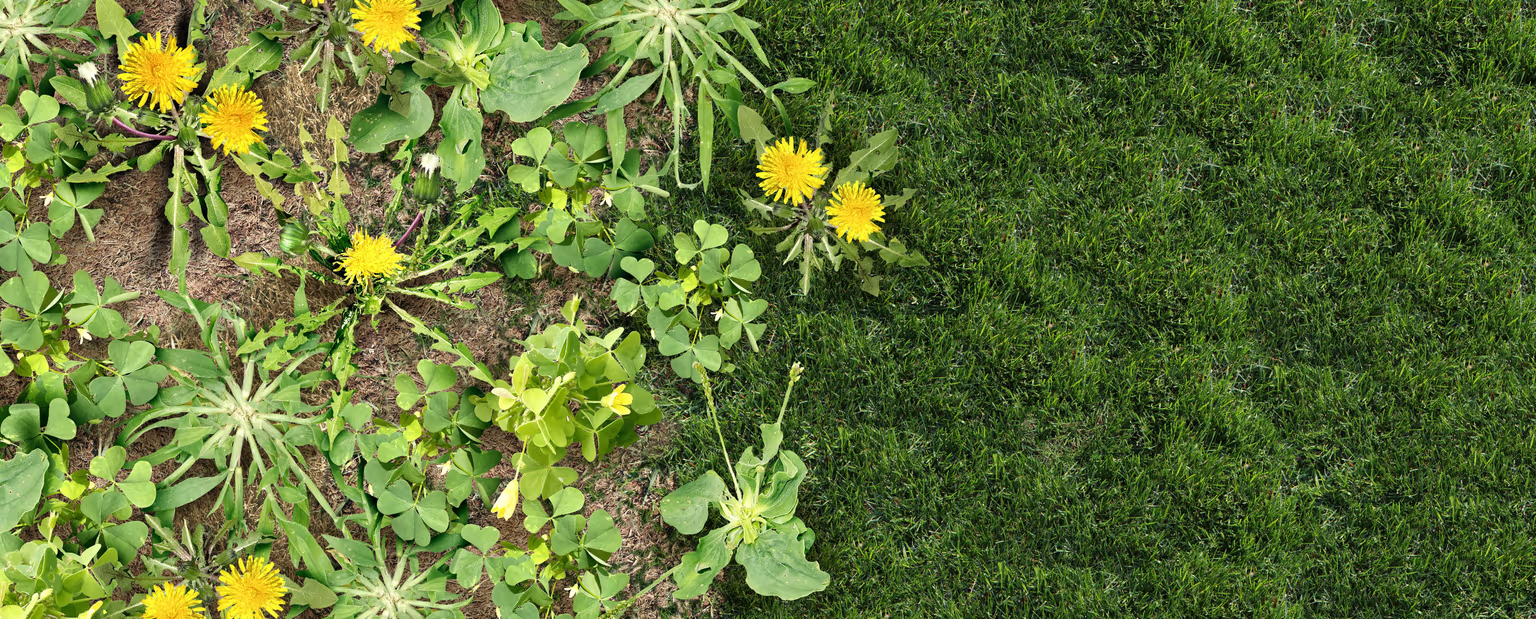
We have Weed Man franchises from coast to coast across both the US and Canada. But there is one problem that is nearly universal to all grass types and climates: dandelions.
Some people see them as a sign that spring is here. Others see them as annoying weeds that need to be destroyed immediately. And if you’re reading this article, odds are good you’re in the second category.
Consider this your introduction to dandelion control. Notice how we didn’t say “kill dandelions.” It’s about controlling them, not killing them. Killing dandelions may work today, but don't worry, they'll be back; it's just a matter of when.
This is obviously the easiest part. We all know what a dandelion looks like, with its yellow blooms and basal leaves. This is, of course, followed by their globe-shaped, white "puffball" (pappus) formed after flowering for wind dispersal. And the science behind these puffballs granting wishes is inconclusive at this point.
But how do you identify a dandelion infestation? How many dandelions are too many? When do you have a dandelion problem?
Seeing a handful of dandelions in your yard may not seem like a big deal right now. But we need to remember that a single dandelion has thousands of seeds, so even just one can spread quickly, and not just in your own lawn but also across your neighbors' lawns. This means your dandelion problem can become their dandelion problem in a hurry.
Once dandelions move in, they will compete with your more desired turf and plants for:
This can lead to your/your neighbors’ grass struggling with thin or discolored patches that no amount of watering or fertilizer can fix.
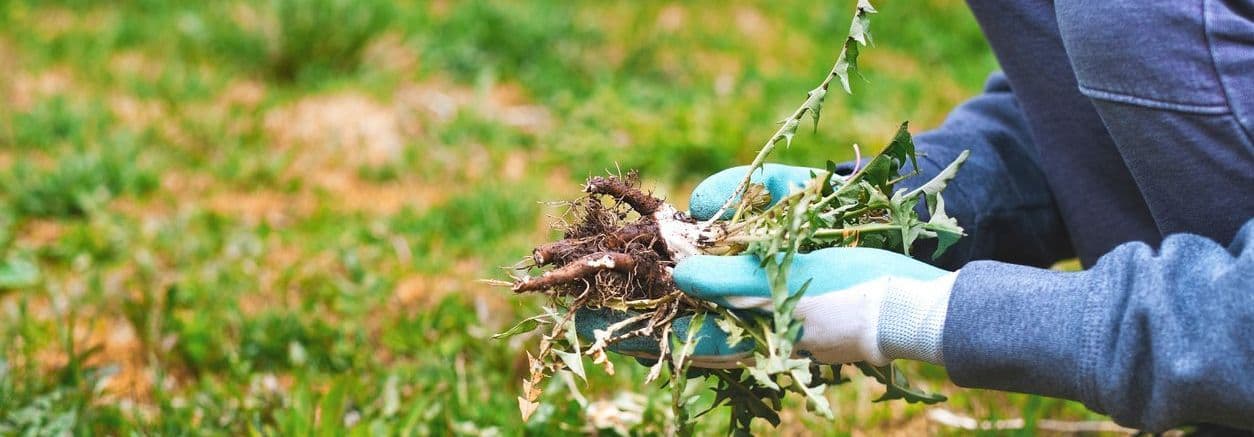
Let us save you a lot of time, sweat, and frustration. If you want to control dandelions, hand-pulling doesn’t really work.
People will tell you that proper hand pulling involves getting all of the dandelion’s taproot. However, it’s incredibly hard to get the entire root, which means the problem will likely come back. And you run the risk of triggering dormant seeds or scattering new seeds, which would make the problem even worse. Not to mention the unsightly hole in the ground that you’re going to leave behind.
So, save your back, enjoy your weekend, and save the trowel for the garden.
Of course, everyone always asks, “How do you attack the dandelions without harming the turf around them? What kills dandelions but not grass?”
If you use a selective herbicide, it is not bad for the grass. Selective herbicides, as the name implies, are selective in controlling the dandelions with no harm to the turf, if label directions are followed correctly.
Selective herbicides contain auxins, naturally found in plants. By applying more of them to broadleaf weeds, it speeds up their growth, causing them to become stressed and eventually die. There are no really clear reasons why this does not affect the turfgrass, other than it appears the grass can process auxins far better and more efficiently than a broadleaf weed.
However, it’s not just about what product you use…
There is an art and a science to using herbicides to treat dandelions.
It’s about more than just knowing the best product to use. It’s about knowing:
We know that dandelion-killer products and weed control products at hardware stores make some pretty big claims. However, it’s definitely in your (and your lawn’s) best interest to leave this to the professionals.
Your local Weed Man has more than the right equipment and hands-on experience–they also have local expertise. That means they know exactly what will and will not work on your exact type of soil and grass.
We’ve already explored three of the most common mistakes people make:
However, we should also flag that a lot of people will start trying to fight their dandelions too soon in the growing season.
We understand that you might have a zero-dandelion policy and want to shoot the first one you see as soon as it pops up out of your lawn. However, it’s important to remain patient.
You don't want to try treating them when nights are still cool, and soil temperatures are low. This will only slow your results, wasting your time and money. At the same time, treating dandelions too early is inefficient. It may mean you have to treat the lawn several times rather than just once.
It's also important to remember that herbicides used to control broad-leaved weeds only kill the weeds that are up and growing. You will not prevent them from germinating. This means that treating your lawn too early means missing your chance to treat late-germinating plants, such as:
We don't want you to have to re-treat your turf each time a new set of weeds germinates throughout the season.
Trust us, those who wait to treat their lawn will experience far better results, with no wasted time, product, or money.
If you’re setting out to remove your own dandelions, it’s important to remember that you are limited by:
First and foremost, if you’ve never done this before, you don’t have much experience to draw from. That means you’re gonna have to learn from trial and error to see what works and what doesn’t work. This can be incredibly frustrating and expensive.
At the same time, if you’re looking for advice on how to do it, you’re probably going to rely on friends, family, neighbors, or YouTube how-to videos. Take all of that advice with a grain of salt, and realize that you are only getting part of the story. They might not tell you that their foolproof method still led to weeds coming back the next spring.
And finally, you probably don’t have the equipment to truly do this properly and on a sustainable level.
On the other hand, if you trust an experienced weed care professional, they have decades of experience in your community. They know exactly what will work in the local soils and how your local weather impacts everything.
They also have carefully calibrated equipment and the experience and expertise to know how to use it.
You may have started this article thinking you would be able to take care of your dandelion problem over the weekend. But now you’re probably seeing how that’s not the case. It goes well beyond a day of hand pulling or pointing and shooting.
Now you’re beginning to see how much time you can waste on pulling weeds, or how much damage you can do to your lawn with the wrong products. And you’re also probably thinking about how much time and money you can waste learning these lessons the hard way.
The simple solution is to call Weed Man. We can save you a lot of money by doing it right the first time. We can also coach you on proper watering, fertilizing, and mowing practices to help keep dandelions away year after year.
Maybe most importantly, we will give you back your nice weather weekends. Spend your time relaxing on your beautiful lawn instead of sweating over it.
We know we’ve covered a lot of ground today (pun not regretted). So let’s summarize the key points we’ve discussed:
If you want to control the dandelions in your yard, we can help! You can start right now by answering a few quick questions about your lawn and what you’re dealing with.
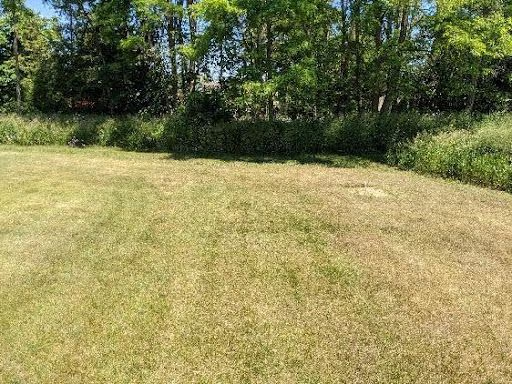
Drought stress refers to the negative effects on a lawn when there is not enough water available for the grass to properly grow and thrive. This can cause the grass to turn brown and dormant, while al...
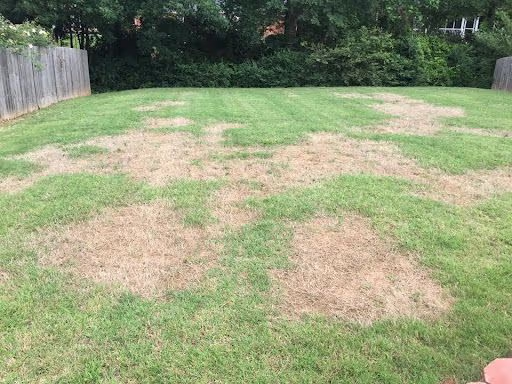
Take-All Patch, also called “Root Rot,” is a common fungal disease that affects the roots of grass plants, particularly in golf courses and lawns. It attacks lawns that are already stressed, weakened,...
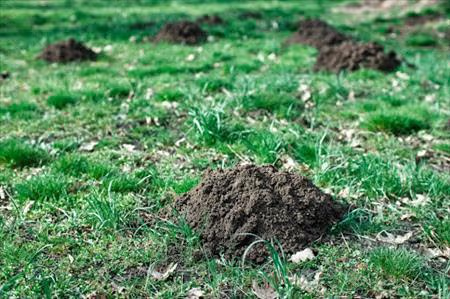
The adult mole is a small, burrowing mammal, commonly found in lawns and gardens. It has dark gray or brown velvety fur and a cylindrical body that is 5 to 8 inches long. It has small eyes and broad f...

