Written By
Allison Russell
Published On
April 2, 2025
There are a lot of reasons to love your lush, healthy lawn. It’s a beautiful place to play, relax, socialize, and just generally live your life—it’s even good for your health. But did you know your lawn is also good for the environment? That’s right! Healthy green spaces, like residential lawns, provide essential ecosystem services, like producing oxygen and capturing carbon, majorly giving back to the environment in urban and suburban areas. Here’s how.
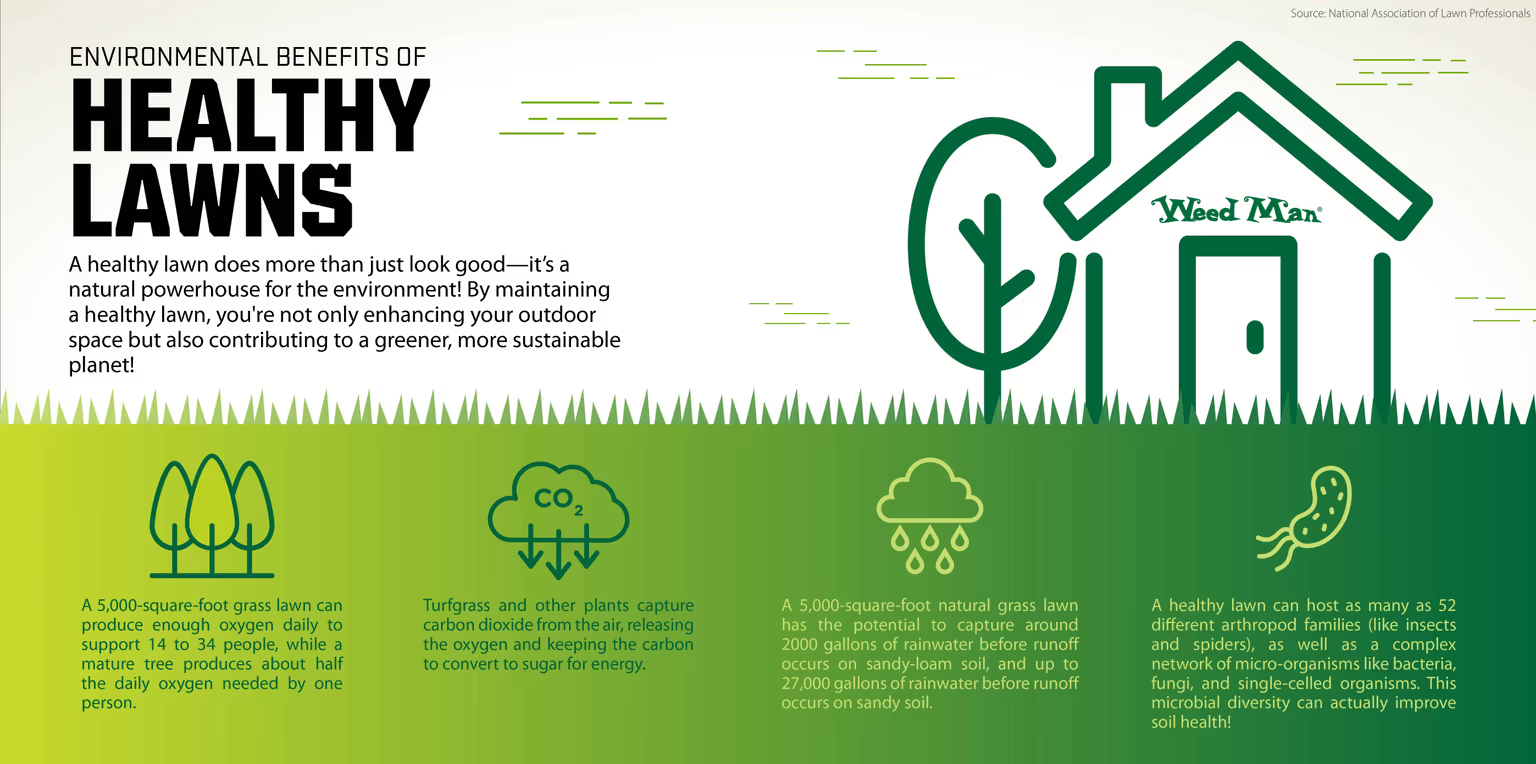
Photosynthesis is the process by which plants (including turfgrass) convert sunlight, water, nutrients, and carbon dioxide into energy, releasing oxygen back into the air as a byproduct. In fact, researchers have found that one 5,000-square-foot grass lawn can produce enough oxygen each day to support 14 to 34 people, depending on location. A mature tree, by contrast, produces about half of the oxygen needed by one person per day. That means your healthy lawn is the biggest oxygen contributor in your yard!
Another perk of photosynthesis? Turfgrass and other plants capture carbon dioxide from the air, releasing the oxygen and keeping the carbon to convert to sugar for energy. This process of carbon sequestration essentially helps clean the air of a harmful greenhouse gas! Carbon modeling research of a typical suburban home on a half-acre lot, landscape beds, shrubs, trees, and a grass lawn indicate that between 81% and 90% of the carbon captured in this type of landscape is captured by the lawn.
In urban and suburban landscapes, with more and more land devoted to concrete and buildings, stormwater runoff can carry pollutants like oil and bacteria into our natural waterways like rivers, lakes, and oceans. Your lawn, however, has the power to reduce and filter stormwater runoff, preventing water pollution and reducing flooding! Research shows that a 5,000-square-foot natural grass lawn has the potential to capture around 2000 gallons of rainwater before runoff occurs on sandy-loam soil, and up to 27,000 gallons of rainwater before runoff occurs on sandy soil. The presence of natural grass has been shown to reduce runoff and soil losses from erosion from 6 to 18 times greater than bare soil.
It’s a common myth that turfgrass lawns are a monoculture, but that couldn’t be further from the truth! Remember how lawns capture carbon? Well, some of that carbon is actually deposited into the soil, which significantly contributes to the thriving habitat of arthropods and micro-organisms below the surface. A healthy lawn can host as many as 52 different arthropod families (AKA: invertebrates like insects and spiders), as well as a complex network of micro-organisms like bacteria, fungi, and single-celled organisms. This microbial diversity can actually improve soil health!
When we take care of healthy green spaces, they take care of us! Weed Man is here to help you nourish your very own healthy green space with environmentally responsible, expert services like fertilization, weed control, aeration, and more.
Get a free quote today, and get ready to achieve a lawn care win!
Written By
Allison Russell
Published On
April 2, 2025

Calling all customers! Help us plant the seeds of kindness and give a much-needed hand to our neighbors. It’s time for our 3rd Annual Grassroots Giving food drive.

Calling all customers! Help us plant the seeds of kindness and give a much-needed hand to our neighbors. It’s time for our 3rd Annual Grassroots Giving food drive.
Calling all customers! Help us plant the seeds of kindness and give a much-needed hand to our neighbors. It’s time for our 3rd Annual Grassroots Giving food drive.

